
- Home
- South America
- Mexico
Car rental in Mexico

- Secured payment guarantee
- 10+ million clients
- Multi-language support
- Booking of any class cars
- 600 providers worldwide
ES
MXN
 Drive on
Right Side
 Average price
€42.73 per day
 Cheapest price
€42.73 per day
 Most popular car type
FullSize
 Best month to book
October
 Top rated supplier
FOX
Tips for scoring a cheap car to rent in Mexico
Looking for a cheap car rental in Mexico? With Economybookings, you can easily compare multiple providers to find the best possible deal, no matter what you plan to do while driving around Mexico. A quick comparison can save you time and money, which means you can kick back and enjoy some classic pura vida.
- Compare pickup locations – Select the broader urban area instead of a specific location to unlock more deal options, including off-airport savings.
- Slightly adjust pickup times and dates – Even changing your booking by an hour can reveal lower rates.
- Choose the right car for your needs – For more rugged excursions into rural areas, a sportier four-wheel drive vehicle can help navigate through rougher terrain. But if you mostly plan on exploring in and around popular urban destinations like Mexico City, Guadalajara, Cancún, and Los Cabos, a compact car can help you save time on finding parking and money on fuel costs.
- Book early – Peak travel periods like winter snowbird season (December-April) often see higher prices, so reserving in advance helps secure better rates and availability.
Tips when renting a car in Mexico
- Rent a car if you plan to go beyond the big cities and the popular resort towns to reach smaller towns, the mountains, and remote beaches, as mass transit options are limited outside the most touristy areas.
- Avoid rush hour traffic on major highways in the big cities, and on popular tourist routes like Federal Highway 1 in Los Cabos, Federal Highway 200 (also known as the Carretera Pacífico) connecting Puerto Vallarta to the Riviera Nayarit, and Federal Highway 307 in the Riviera Maya.
- Picking up your rental car at major airports like Mexico City, Cancún, and San José del Cabo provides the best vehicle selection and access to toll road options.
- Choose a mid-size or compact car for easier parking at resorts and city centers, and consider a SUV if you aim to drive far beyond the major cities.
- Mexico currently has no emission zones or congestion pricing programs, but Mexico City does limit car use in some urban areas, and the country does have multiple toll roads—ask your rental company about toll payment options.
- Always inspect the car and take photos before and after your rental.
Driving tips in Mexico
- Drive on the right and overtake on the left.
- Headlights flash as a polite signal (e.g., to let you pass), and they may be required to drive at night.
- On highways faster drivers tend to drive in the left lanes, while the right lanes move more slowly.
- Prepare to pay anywhere from MXN 15 to 36 (or about USD$1-2) per hour for parking in a secure lot.
- While some of the major cities and popular tourist corridors tend to maintain well-paved roads, you will likely encounter some gravel and unpaved roads in less touristy cities and rural areas. If you plan to drive into the backcountry during your trip, it pays to research local road conditions in advance.
- In Mexico, gas stations are generally regulated for price and safety. Keep in mind that all stations are full-service, meaning an attendant will pump gas for you. And though most stations are safe, it’s always a good idea to keep your debit or credit card within your possession when it’s time to pay.
- Keep your driver’s license, rental papers, and insurance with you at all times. (You might also want to keep your passport or proof of valid passport within easy reach as well.)
- Mexico requires all drivers to have insurance covering third-party damages, and additional packages are usually available to provide comprehensive coverage. Talk with your rental agency about which options are available with you and how much coverage you will need to ensure a safe journey in Mexico.
Speed limits
In Mexico, speed limits are typically 10 km/h (6 mph) in residential neighbourhoods and parking lots, 60 km/h (37 mph) on city streets with no posted speed limits, 60-80 km/h (37-50 mph) on major urban arterial roads, 70-90 km/h (43-56 mph) on two-lane rural highways, 90-100 km/h (56-62 mph) on urban highways, and 110 km/h (68 mph) on major highways without lower posted speed limits. Also note that Mexican authorities enforce any speeding detected above 130 km/h (81 mph), so resist any urge to drive super fast on the highway. Always watch for posted signs, as limits can vary.
Road signs
Mexican road signs follow international standards and are usually clear and well-placed. They’re primarily in Spanish, but they often include some English translation and use symbols in popular tourist zones. Speed limit signs are in kilometres per hour (km/h). In Mexico, look out for signs marking one-way only streets, bus-only lanes, shared bike lines, and designated school lanes, which may have time-based restrictions and speed limits.
Toll roads and park fees
As of 2025, Mexico has an autopista network of toll roads nationwide. Not only do major cities like Mexico City, Guadalajara, and Tijuana have toll roads, but so do popular tourist regions like Los Cabos and the Riviera Maya. Cash is generally accepted at toll booths, though electronic tag programs like IAVE are increasingly coming online, and it might be worth asking your rental company if they offer cars with these electronic transponders.
If you plan to drive to any of Mexico’s national parks and reserves, note that many of these parks charge admission fees. With that said, the Mexican government offers an amazing deal of a MXN 1736 (or about USD$95) annual fee for unlimited access to national parks and biosphere reserves, and the annual pass may be worthwhile for those planning to visit multiple parks like Cabo Pulmo, Cumbres de Monterrey, El Tepeyac, Tulum, and Islas Marietas.
Discover Mexico by car
If you intend to stay in Mexico City or a beach resort town like Cabo San Lucas for the full duration of your trip, you might be able to do a car-free vacation. Yet since Mexico has so much rural territory with many of the nation’s top attractions, a car can help you reach everywhere else you want to go. In short, a rental car makes it much easier to get to more of Mexico’s world-famous beaches, ancient Mayan archaeological sites, and charming historic towns like San Miguel de Allende and Santiago de Querétaro. While you can find a few trains and buses that serve some of these areas, a rental car provides a whole lot more flexibility and freedom.
When to Visit
Since Mexico is a big country with multiple large cities and climate regions, the best time to visit largely depends on where you want to go and what you want to do. With this said, the summer months (June-September) tend to be Mexico’s wettest countrywide, so keep this in mind when you’re planning your trip. Also note that August and September tend to bring the most risk for hurricanes in tropical coastal areas like the Cancún and the Riviera Maya, Los Cabos, and Puerto Vallarta and the Riviera Nayarit.
For the best road trip weather, you may want to try the spring and fall shoulder seasons, when you will likely run into less severe weather and more sunshine. But if you’re aiming to ditch the crowds and save money, summer tends to bring the fewest crowds and the lowest prices to Mexico City and the major beach resort corridors. Whenever you plan to hit the open road, make sure to pack water and sunscreen, and to check weather forecasts before leaving.
Languages & Communication
Spanish is the primary language spoken in Mexico, yet this nation is also quite multicultural and home to diverse communities. In largely indigenous rural areas, you may encounter locals speaking indigenous languages like Nahuatl, Yucatec Maya, Tzeltal, Tzotzil, Mixtec, and Zapotec.
At the same time, as Mexico has grown into a popular tourist destination and a major global economy, they’ve become well-equipped to welcome visitors from all around the world. In major cities like Mexico City and Guadalajara, and in popular beach resort destinations like Cancún, Los Cabos, and Puerto Vallarta, most services are available in English, and you will encounter hotel and resort staff who are highly experienced in assisting non-Spanish speakers.
Currency & Payments
Mexico primarily uses its own currency, the Mexican peso. While U.S. dollars are widely accepted in cities like Tijuana and Ciudad Juárez near the U.S. border, and in some beach resort cities like Cancún and Cabo San Lucas that draw many U.S. tourists, most other parts of the country stick to their own currency. Beyond the areas closest to the U.S. border, it’s generally not a good idea to assume any Mexican vendor will accept payment in U.S. dollars.
If you prefer not to deal with paper currency, rest assured that credit cards and debit cards are widely accepted in Mexico, and that contactless payments are becoming increasingly common at gas stations, hotels, restaurants, and stores. ATMs are readily available throughout cities and popular tourist destinations, making it easy to withdraw cash if needed, and you’re probably safest using ATMs inside bank branches and lobbies.
Top driving routes in Mexico
Mexico is an incredible nation for road trips. Whether you aim to explore the open desert, experience some magical historic villages, or simply chill at the beach, these top driving routes highlight some of the best day trips and weekend getaways across the nation:
- Monterrey – This may be Mexico’s third-largest city, yet it’s also become northern Mexico’s primary economic and transportational hub, and it's a great place to dive into northern Mexico’s amazing art scene and culinary culture.
- Guadalajara – Heading over to Mexico’s second-largest city is always worth the journey. Not only is it the city that gave birth to beloved Mexican traditions like mariachi, charreadas (or rodeos), and birria, but it’s also a contemporary city with plenty of great markets, galleries, and restaurants. In addition, it’s a great launchpad for excursions to the town of Tequila that produces Mexico’s most famous alcoholic beverage.
- San Miguel de Allende & Santiago de Querétaro – In the heart of the country are two incredible cities chock full of historic treasures. Querétaro is a more diversified economic hub akin to Monterrey, while San Miguel de Allende is a UNESCO World Heritage City with a growing array of posh hotels and creative restaurants.
- Mexico City – As Mexico’s capital and North America’s most populous city, CDMX is the place for exceptional art, cuisine, history, and so much more. Come for cherished landmarks like the Aztec-era Templo Mayor, the Catedral Metropolitana, and the Museo Frida Kahlo, and stay to discover the timeless elegance of the Condesa neighbourhood and the avant garde culture of Roma Norte.
- Cancún – For over half a century, Cancún has served as the gateway to Mexico’s Caribbean coast. In town, you will find a broad selection of all-inclusive resorts and higher-end hotels that open up to spectacular white sand beaches. Beyond town, you’re within reach of some of Mexico’s most famous ancient Mayan archaeological sites.
- Tulum – Though this Riviera Maya beach town can trace its origins to the Mayan era, it’s really exploded in popularity within the past three decades. Though it now draws a lot more tourists, it’s still worthwhile for history buffs seeking out grand Mayan ruins, as well as those looking for Mexico’s most sugar-soft white sand beaches.
- Oaxaca City & the Oaxaca Coast – Shifting to Mexico’s Pacific coast, Oaxaca has quickly emerged as a new tourism hotspot. Along the coast, Puerto Escondido is a boho-chic surfer’s paradise with big waves and tropical beaches, while Huatulco is a more polished beach town with full-service resorts. And inland, Oaxaca City is a lovely town full of historic churches, plazas, markets, and much more.
- Puerto Vallarta & the Riviera Nayarit – West of Guadalajara lie some of Mexico’s most beautiful and fascinating beach towns. Puerto Vallarta (or PV) constantly flows with tourists, yet it still retains its own signature flavour, and it’s a favourite among LGBTQ+ travellers for its friendly and easygoing spirit. To the north of PV is the Riviera Nayarit, or a string of cool beach towns ranging from the luxurious resort town of Punta Mita to the laid-back villages of San Pancho and Lo de Marcos.
- Los Cabos – Anchoring the southern tip of the arid Baja California peninsula are the cities of San José del Cabo and Cabo San Lucas. While both cities draw a whole lot of tourists, San José del Cabo tends to be the quieter city with more of its own local culture. Meanwhile, Cabo San Lucas is the place to go for brand-name beach resorts, popping nightlife near the marina, and stunning natural landmarks like El Arco and Lovers Beach.
Explore popular cities with our best car rental in Mexico

Experience the top locations with cheap car rental in Mexico

Discover the cheapest car rental in Mexico
* Disclaimer: Prices and availability shown may not reflect today’s rates.




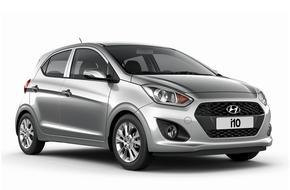






Best car rental companies in Mexico
























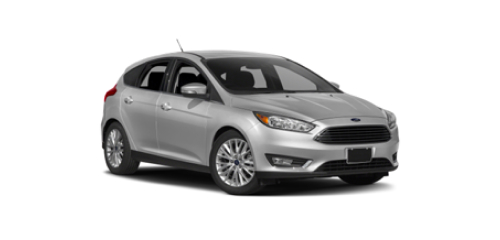
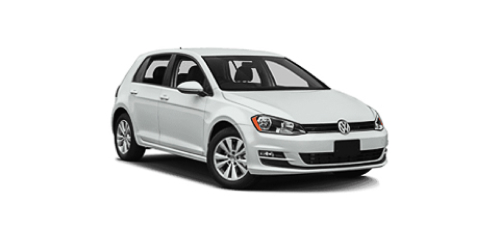
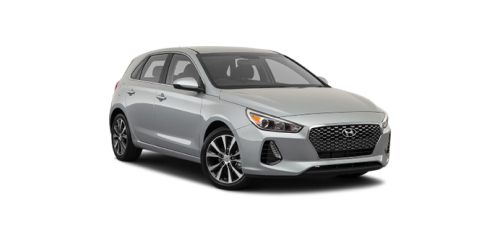
Explore Our Wide Range of Popular Car Types
Find exclusive special offers on popular car types and Save Big with EconomyBookings!
* Disclaimer: Prices displayed may not reflect today's rates.


Subscribe to our newsletter
Sign up and stay updated on our special offers and best deals.
By signing up you agree to EconomyBookings Privacy Policy



- All trips in one place
- Instant confirmation
- App-only deals