Tips for renting a car for cheap in San Francisco
Need a cheap car rental in San Francisco? With Economybookings, you can easily compare multiple providers to find the best possible deal in the Bay Area. With so much to experience across Northern California, a quick comparison can save you time and money on a car that will help you reach it all.
- Compare pickup locations – Select the broader urban area instead of a specific location to unlock more deal options, including off-airport savings.
- Slightly adjust pickup times and dates – Even changing your booking by an hour can reveal lower rates.
- Choose economy or compact cars – Unless you’re planning a longer road trip up the North Coast or into the mountains, a compact car will likely meet all your needs in San Francisco, the East Bay, and Silicon Valley.
- Book early – San Francisco tends to stay booked and busy year-round, but rental demand spikes during popular travel times like summer (June to August), major holidays, and large events like cultural festivals and business conventions. Booking in advance helps secure lower prices and better vehicle selection.
Tips When Renting and Driving a Car in San Francisco
- Rent a car if you plan to visit places outside the city, where mass transit options may be limited.
- Avoid rush hour traffic on the US 101, I-80, I-280, I-580, I-680, and I-880 freeways.
- You can pick up your car at major airports like San Francisco International (SFO), Oakland, and San José, and at various storefronts around the city.
- Choose a small car for better mileage and easier parking around the city.
- Pick a car with four-wheel drive for longer drives into rural areas and along the coast.
- Inspect the car and take photos before and after rental.
Driving Tips in San Francisco
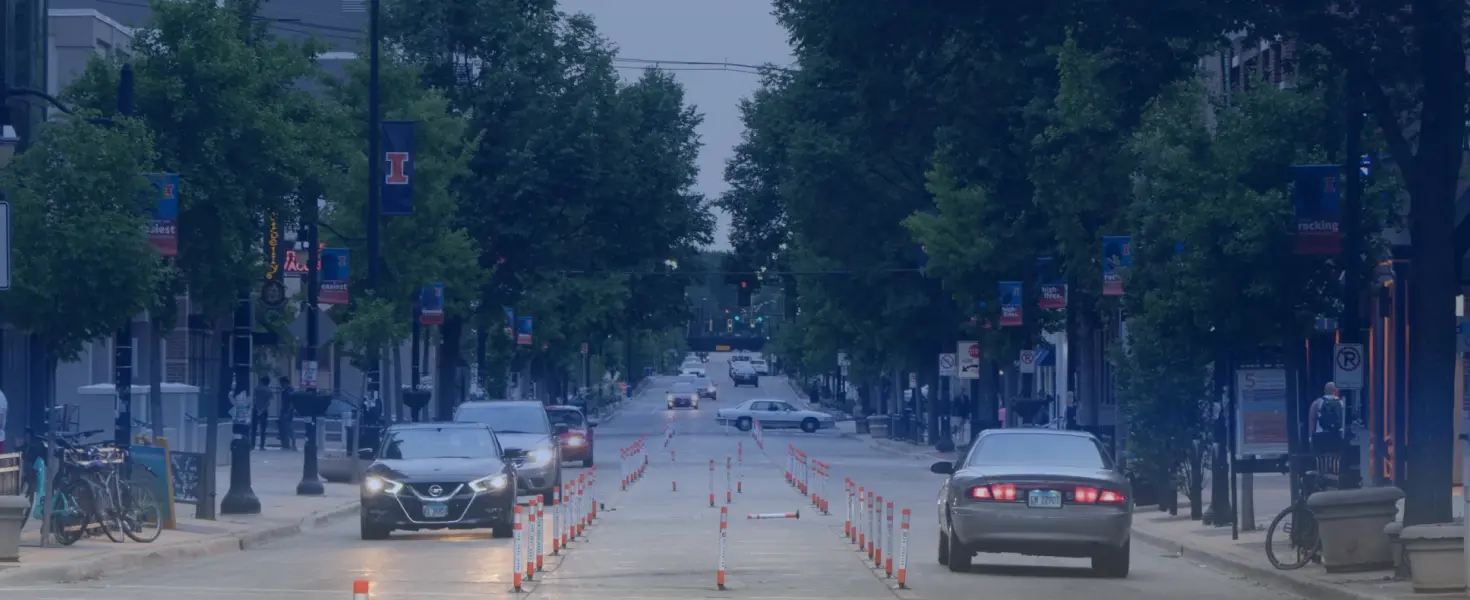
- Drive on the right side of the road, and prepare to wait your turn when you need to turn left.
- Look out for stop lights—green means go, yellow signals that you must prepare to stop, and red is stop. At most intersections with stop lights, there will also be dedicated stop lights for left-turn lanes.
- Traffic calming circles, which function similarly to roundabouts, can be found in various neighborhoods around town – give way to traffic coming from the left.
- California law requires headlight use from 30 minutes after sunset to 30 minutes before sunrise, during inclement weather (like heavy rain and fog), and whenever else outside visibility falls below 1,000 feet.
- Horn use should be reserved for emergencies or warnings.
- Traffic usually moves faster in the left lanes on highways.
- Expect to pay around $25-60 per day for parking in SF. When in the city, you can use the PayByPhone Parking app for contactless payment.
- NEVER cross a set of double yellow lines.
- Try the GasBuddy app to locate area gas stations and check prices. If you have a Costco membership, you can refuel there and take advantage of their very cheap gas.
- Keep your driver’s license, rental papers, and proof of insurance with you at all times.
- I-80 is the main west-east freeway that connects San Francisco to Oakland, Sacramento, and points beyond. Meanwhile, US 101 and I-280 are the north-south freeways linking San Francisco and San José/Silicon Valley. I-880 runs north-south from San José to Oakland, and US 101 continues north of SF to Santa Rosa and all the way up to the Oregon Coast. These major highways can be useful for reaching more of Northern California and beyond, but expect heavy traffic during weekday rush hours (7:00 to 9:00 AM, and 4:00 to 7:00 PM).
Speed Limits
Under California law, speed limits are 65 mph (105 km/h) on most multi-lane freeways (with some rural freeways allowing up to 70 mph or 113 km/h), 55 mph (89 km/h) on two-lane highways, 35 mph (56 km/h) on most city streets, and 25 mph (40 km/h) on streets in residential neighborhoods and school zones.
When driving in the City of San Francisco, note that the city is implementing a new program to make neighborhood streets safer for pedestrians and bicyclists, with speed limits topping at 20 mph (32 km/h) in neighborhoods like South of Market (SoMa), the Financial District, Chinatown, and North Beach, and the city is set to roll out this lower speed limit other designated high-injury corridors citywide as of Fall 2025. Always watch for posted signs, as limits can vary.
Road Signs
U.S. road signs are typically noticeable and well-placed. They are almost always in English and use symbols for quick understanding. Speed limit signs are in miles per hour (mph). In San Francisco, look out for signs marking dedicated rail crossings, cable car lines, bus lanes, bike lanes, and school lanes, which may have special speed limits and other restrictions.
Tolls, Fees, and Restrictions
Over the years, the SF Bay Area has grown a large collection of toll roads. You will primarily run into tolls at popular bridges, including the Golden Gate Bridge (US 101) that connects San Francisco and Marin County, the San Francisco/Oakland Bay Bridge (I-80), and the San Mateo/Hayward Bridge (SR 92) that directly links Silicon Valley and the East Bay. In addition, you will find pay-to-use Express Lanes that run alongside standard freeway lanes at US 101, I-580, I-680, and I-880.
California’s toll roads accept several payment options, with FasTrak electronic transponders being the most widely accepted. In the Bay Area, drivers without a transponder should be able to pay online by providing their license plate number in advance or within five days of driving. Wherever you begin your Northern California trip, check with your rental car agency in advance to see if they provide a FasTrak transponder and ask about their toll road coverage policies.
Discover San Francisco and Northern California by Car
If you intend to primarily stay in the city and not venture farther than inner ring suburbs like Oakland and Palo Alto, you may be able to pull off a car-free trip. But if you’re thinking about exploring more of Northern California, a car can really help you get where you want to go. With a rental car, you won’t have to worry about limited rail service and pricey Uber and Lyft rides.
Whether you're planning an enchanting weekend in wine country, a chill day at the beach in Half Moon Bay, or a longer road trip to Monterey, Big Sur, or Lake Tahoe, a car offers flexibility and freedom to discover hidden spots that are much harder to reach via public transportation in the US.
When to Visit
Though San Francisco works great as a year-round destination, some areas are affected by seasonal conditions. In winter, Lake Tahoe’s ski resorts open for the season, and the combination of visitor traffic and snowy/icy roads can make for long drives on I-80. On the flip side, schools’ summer vacations and inland regions’ hot summer weather bring large crowds to the beaches to cool off.
In most years, September and October actually bring the most pleasant weather to San Francisco. Meanwhile, if you’re hoping to do some skiing and snowboarding, February and March tend to be the best months for a Tahoe ski trip. Whenever you plan to hit the open road, make sure to pack water and sunscreen, and to check weather forecasts before leaving.
Languages & Communication
English is spoken nearly everywhere in and around San Francisco. With that said, SF is also a multicultural city, so you may also hear Chinese, Spanish, Vietnamese, Tagalog, and Russian in certain neighborhoods. Most signage is in English, and visitors rarely face language barriers.
Currency & Payments
Since California is part of the United States, the U.S. dollar ($, or USD) is used everywhere. Credit and debit cards are widely accepted, and contactless payments have largely become commonplace around SF. ATMs are easy to find throughout the city and suburbs, but keep in mind that ATMs will charge extra fees if they are not affiliated with your bank.
Top Driving Routes in and Around San Francisco
- Even if you’re not planning to stay in a hotel or vacation rental in the city, San Francisco itself is worth at least a day trip to explore vibrant neighborhoods like Chinatown, Japantown, and the Castro, and to hit key landmarks like Golden Gate Park and Fisherman’s Wharf
- Stinson Beach & Bolinas – About 45-60 minutes north of Downtown SF; the drive on the Golden Gate Bridge itself may be worth this road trip, but it also feels great to stroll the shore in these scenic Marin County beach towns
- Russian River Valley – Around 1.5-2 hours north of SF; come here (with a designated driver) to explore the backcountry roads en route to award-winning wineries, enjoy pleasantly laid-back vibes in smaller towns like Guerneville, and hop around the many tasting rooms in Healdsburg
- Napa Valley – About 1-1.5 hours north of SF; perhaps California’s most world-famous wine country region, here is where you will encounter legendary wineries like Stags’ Leap, Domaine Carneros, Rombauer, and Matthiasson Vineyard, as well as Michelin-starred restaurants like The French Laundry and Auberge du Soleil
- Sacramento – About 1.5-2 hours east; California’s state capital may not initially seem like the most exciting destination, but it’s chock full of historic treasures in Old Town, and it places you within reach of some wildly underrated wineries in Lodi and the Gold Country
- Lake Tahoe – About 3-4 hours east; in summer Tahoe comes alive with marvelous freshwater beaches at spots like Kings Beach and Emerald Bay, while winter means epic skiing and snowboarding at ski areas like Northstar, Palisades Tahoe, and Heavenly
- Half Moon Bay – About 45 minutes south; this town is home to the Bay Area’s top surfing beaches like Mavericks, along with a quaint coastal village and “quiet luxury” resorts
- Monterey, Carmel, & Big Sur – About 2-3 hours south; Monterey is a cool and dynamic coastal city with the historic heart of a working fishing town, while Carmel-by-the-Sea is an elegant artists’ village with top-tier luxury hotels and restaurants, and Big Sur to the south may make for California’s most spectacularly scenic road trip with its rugged forests and pristine beaches
In recent years, we’ve seen a lot of traditional media reports (and even more social media hype) on crime in San Francisco and elsewhere in the Bay Area. While select neighborhoods like the Tenderloin might present some safety issues, SF overall has a very low crime rate for a major US city. Still, in order to stay safe wherever you’re exploring, follow some simple advice like keeping valuables out of public view, steering clear of distractions that pickpockets tend to stage, and not harassing anyone who’s experiencing homelessness. Basically, don’t try to make a spectacle of yourself, and have fun driving around San Francisco.